
Grand Himalayan Tour – The Best of Nepal, Bhutan & Tibet
Dates from September 2026 to April 2027
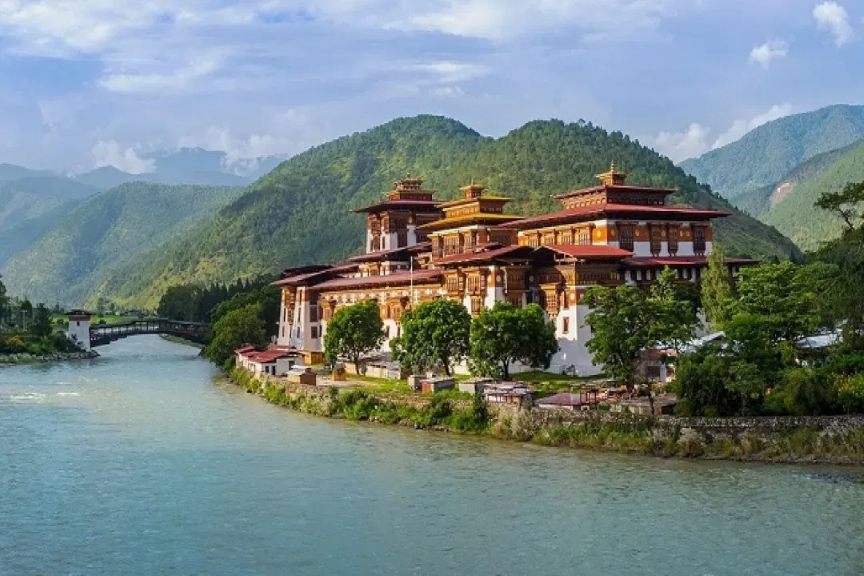
The Best of Nepal, Bhutan, and Tibet tour takes you to three extraordinary South Asian countries in a single holiday.
It traces a path through the three most beautiful Himalayan nations: Nepal — the birthplace of Gautam Buddha and home of Mount Everest; Bhutan — the last Shangri-La, a kingdom that measures its prosperity through Gross National Happiness; and Tibet — the fabled Roof of the World.
All of this without having to compromise on comfort or the breathtaking scenery of glorious mountains.
21 Days | 3 Countries | Unlimited Experiences | ★★★★★ 4.9 on Tripadvisor
Highlights
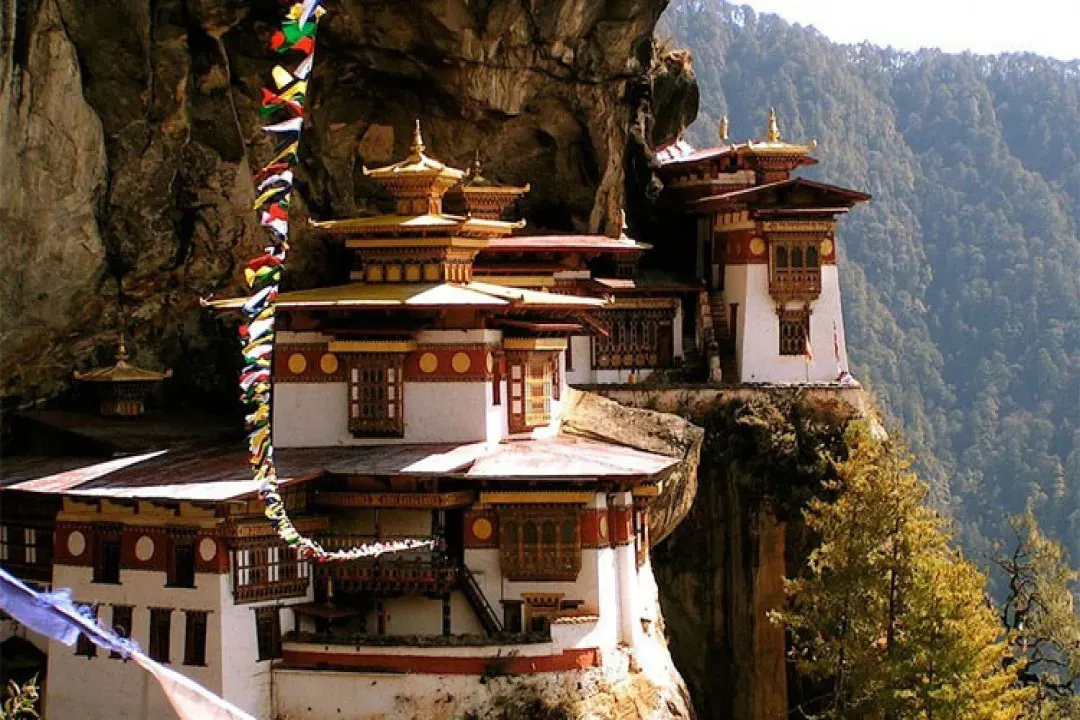
Hike to Taktsang Monastery (Tiger’s Nest) at 3,120m — one of the world’s most dramatic Buddhist sites

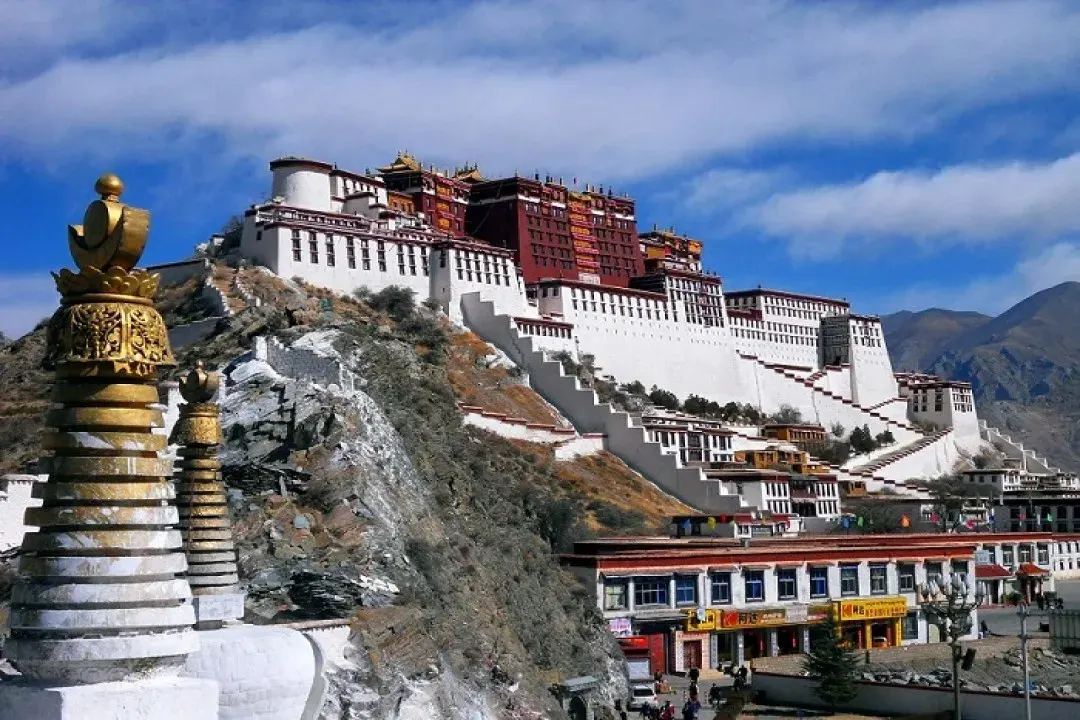
Explore the Potala Palace and Jokhang Temple in Lhasa — Tibet’s greatest UNESCO World Heritage Sites

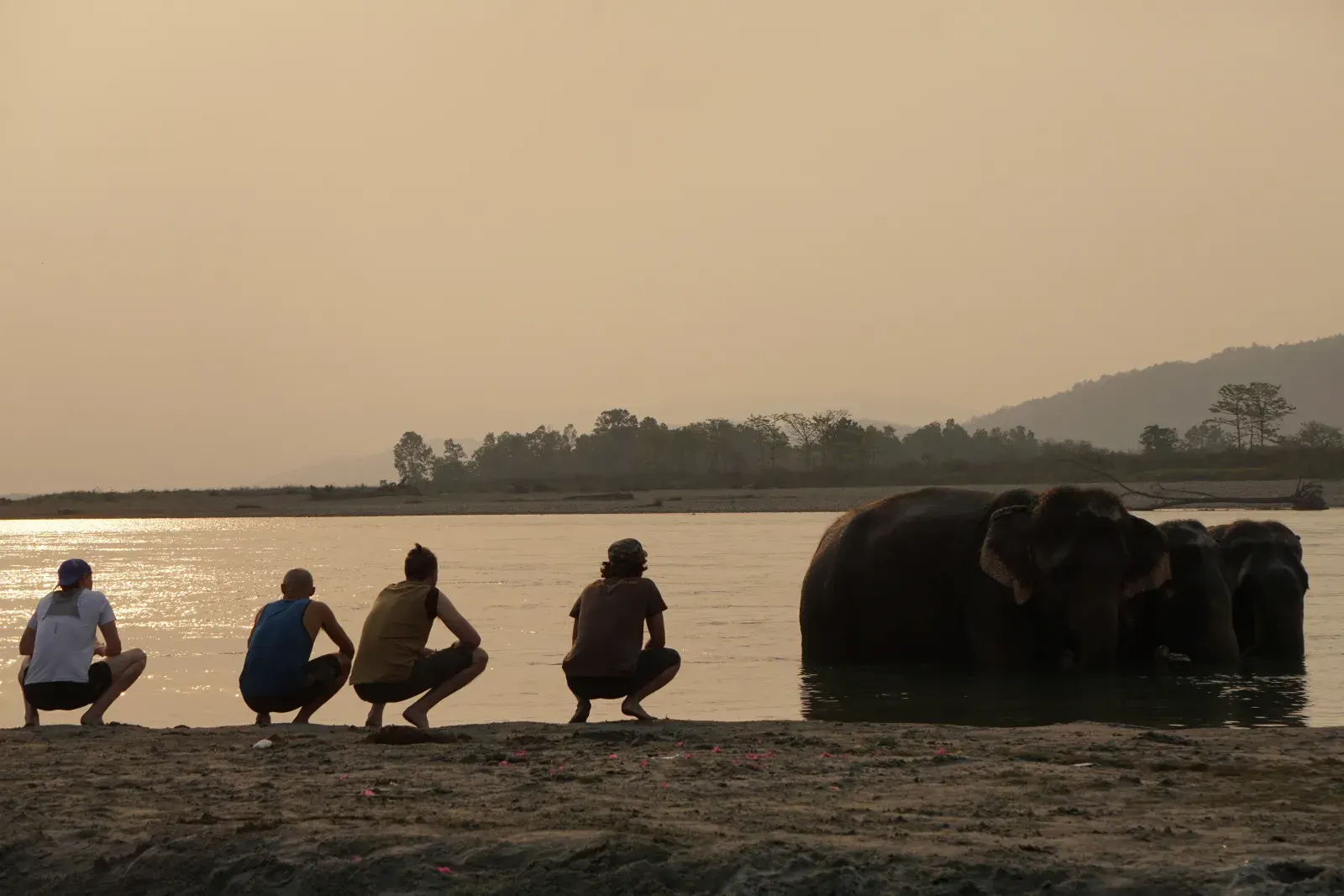
Canoe and jeep safari in Chitwan National Park — one-horned rhinos, crocodiles and over 400 bird species

Cross the Tibetan Plateau past Everest, Cho Oyu and Shishapangma over Gyatso La Pass at 5,220m

UNESCO World Heritage Sites in Kathmandu: Pashupatinath, Boudhanath, Swayambhunath and Durbar Square
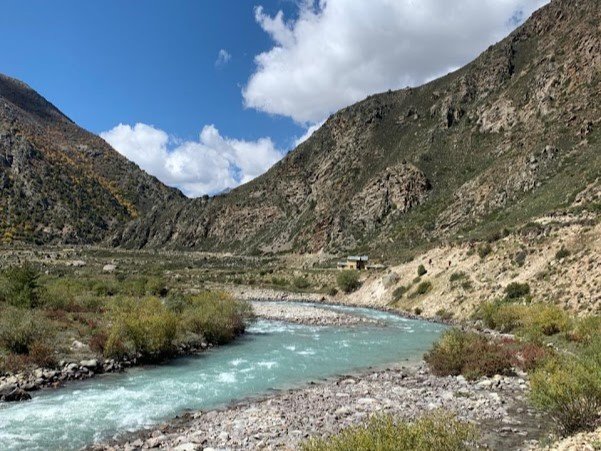
Yamdrok Tso Lake and the Yarlung Tsangpo River on the scenic return journey from Lhasa
Why this trip of a lifetime?
Embark on a 21-day adventure through the Himalayas, exploring the breathtaking landscapes and rich cultural heritage of Nepal, Bhutan, and Tibet. Begin your journey in Nepal, where ancient temples, bustling streets, and UNESCO World Heritage Sites offer a glimpse into the country’s deep history. Experience the wildlife of Chitwan National Park, home to rhinos, elephants, and rare bird species. In Pokhara, take in the serene beauty of Phewa Lake, with the majestic Annapurna range reflected in its waters. Conclude your Nepal exploration in Kathmandu, where sacred stupas and historic palaces reveal the city’s vibrant spiritual essence.
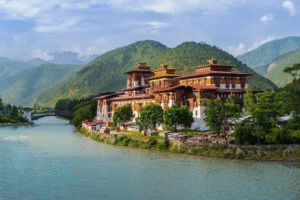
In Bhutan, immerse yourself in the kingdom’s tranquillity and cultural richness. Explore Thimphu, visiting the historic Simtokha Dzong and the King’s Memorial Chorten, where locals gather for daily prayers. One of the highlights of Bhutan is the iconic Tiger’s Nest Monastery — a stunning cliffside temple perched 3,000 metres above sea level, offering both a rewarding hike and spectacular views. Discover the majestic Punakha Dzong, set at the confluence of the Pho Chhu and Mo Chhu rivers, showcasing Bhutan’s harmonious blend of nature and tradition. Throughout your journey, experience Bhutan’s peaceful way of life and its commitment to preserving its cultural identity.
The final chapter unfolds in Tibet, the mystical Roof of the World. In Lhasa, marvel at the grandeur of the Potala Palace — once home to the Dalai Lama — and explore the spiritual heart of Tibet at Jokhang Temple and the lively Barkhor Bazaar. Visit ancient monasteries like Sera and Drepung, where monks continue their centuries-old traditions. Travel across Tibet’s high-altitude landscapes, crossing mountain passes such as Simi La, Karo La, and Kampa La, each offering breathtaking glacier views and dramatic scenery. With moderate hikes and altitudes reaching up to 5,000 metres, acclimatisation is key. This journey is not merely an adventure — it is an immersion into the soul of the Himalayas, offering experiences that will stay with you forever.


Duration:
21 days
Max Altitude:
5,220 m / 17,126 ft
Difficulty:
Moderate
Group size:
2 – 12 people
Best Season:
Spring & Autumn
Region:
Kathmandu Valley Treks, Nepal
Accommodation: 3-4 star hotels; jungle lodge (Chitwan); guesthouses (Tibet)
Meals: Full board in Bhutan & Chitwan; breakfast in Nepal & Tibet
Transport: Private vehicle; flights KTM-Paro-KTM (optional extra ~ £399)
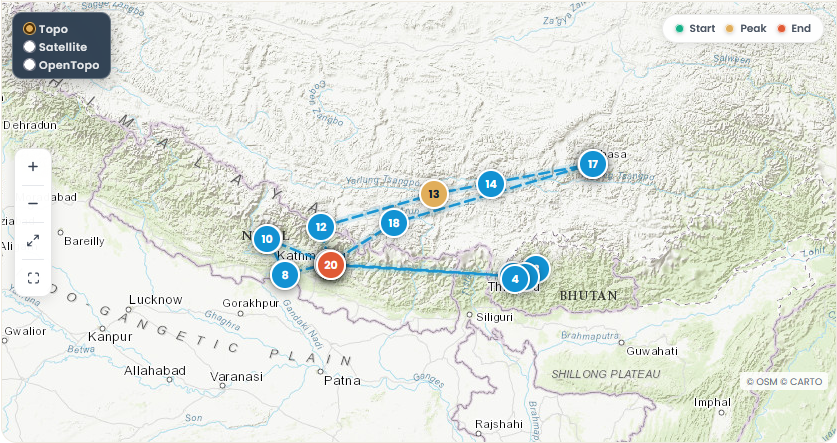
Your 21-day Itinerary
Dropdown to see more
Day 1: Arrival in Kathmandu (1,400 m)
On arrival at Tribhuvan International Airport, our representative will be waiting to welcome you.
You will be transferred to your hotel by private vehicle. After check-in, your correspondent will provide a full trip overview and briefing.
Overnight in Kathmandu.
Meals: Bed & Breakfast.
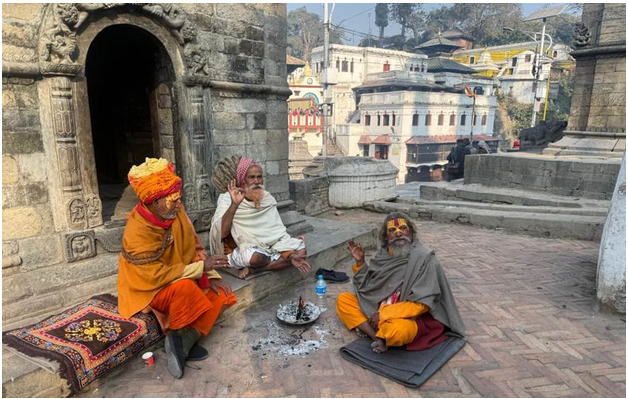
Day 2: Full Day Kathmandu Sightseeing (1,400 m)
Meet your tour guide and driver at 9:00 AM.
Kathmandu Valley is the capital of Nepal and home to seven UNESCO World Heritage Sites — an incredibly diverse city with a breathtaking Newari culture, centuries-old Hindu and Buddhist cultural sites, and a wealth of ancient monuments.
Today’s highlights include:
– Kathmandu Durbar Square
– Swayambhunath Stupa (Monkey Temple)
– Pashupatinath Temple
– Boudhanath Stupa
Overnight in Kathmandu. Meals: Bed & Breakfast
Day 3: Kathmandu to Paro — Drive to Thimphu (2,200 m)
Transfer to the airport for your flight to Paro, Bhutan.
The flight offers spectacular views of the Himalayas, including peaks such as Mount Everest.
Upon arrival at Paro International Airport, you will be transferred to Bhutan’s capital, Thimphu, by scenic drive. En route, visit Simtokha Dzong — one of Bhutan’s oldest fortresses, built in 1627, which serves as a significant cultural and religious centre.
Check into your hotel in Thimphu for the night. Meals: American Plan (Full board).
Day 4: Punakha Sightseeing (1,242 m)
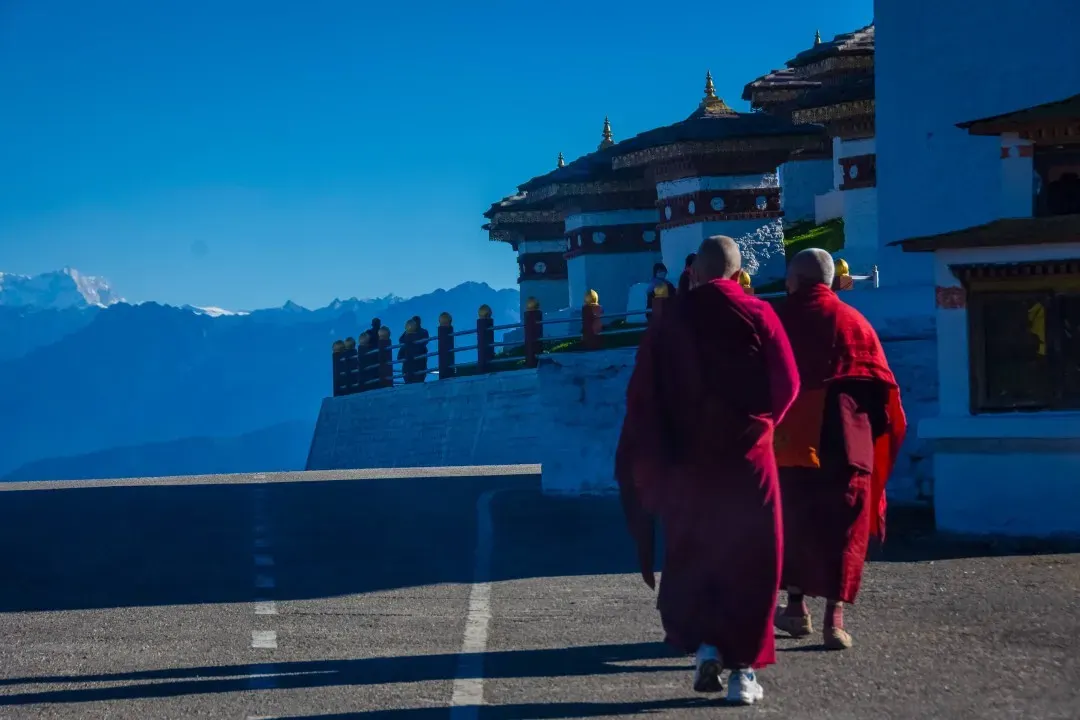
Drive to Punakha, passing through Dochula Pass (3,100 m), where panoramic views of the snow-capped Himalayas await. In Punakha, visit the majestic Punakha Dzong — one of the most beautiful and largest dzongs in Bhutan, located at the confluence of the Pho Chhu and Mo Chhu rivers, often called the “Palace of Great Bliss.”
Later, visit Chimi Lhakhang, a temple dedicated to the Divine Madman Drukpa Kunley, and explore the picturesque village of Wangdiphodrang.
Return to Thimphu for an overnight stay.
Meals: American Plan (full board)
Day 5: Thimphu Sightseeing — Drive to Paro (2,334 m)
Explore the cultural richness of Thimphu with visits to the Memorial Chorten — a stupa dedicated to Bhutan’s third king, Jigme Dorji Wangchuck — and Tashichho Dzong.
This fortress serves as Bhutan’s administrative and religious centre, housing the King’s office.
Drive to Paro and check into your hotel for a relaxing evening. Meals: American Plan (full board)
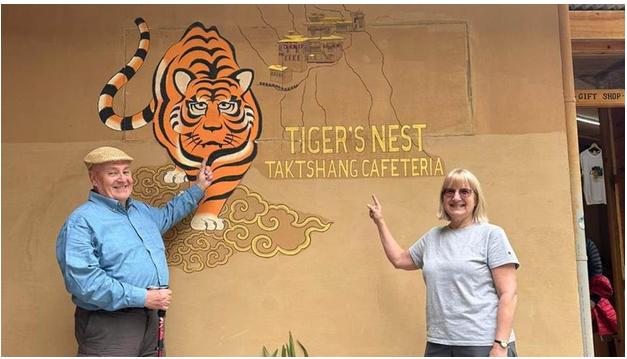
Day 6: Taktsang Monastery (Tiger’s Nest) Hike (3,120 m)
The highlight of the Bhutan section: today you hike to the famous Taktsang Monastery (Tiger’s Nest).
This iconic monastery is perched on a cliff 900 metres above the Paro Valley floor, offering breathtaking views.
The hike is moderately challenging, taking approximately 3–4 hours to reach the monastery. Along the way, pass through scenic forests and enjoy the serenity of the surrounding landscape. Once at the monastery, explore its spiritual significance and remarkable history.
After descending, visit a traditional Bhutanese farmhouse for a cultural experience.
Overnight in Paro. Meals: American Plan (Full board)
Day 7: Paro to Kathmandu (Flight) — Patan & Bhaktapur (1,400 m)
Depending on your flight schedule, you will be transferred to Paro Airport for your return to Kathmandu.
Upon arrival, a representative will meet you and transfer you to your hotel.
After rest, enjoy a half-day sightseeing excursion to Bhaktapur Durbar Square and Patan Durbar Square — two of the finest examples of Newar architecture and art in the Kathmandu Valley.
Overnight in Kathmandu. Meals: Bed & Breakfast.
Day 8: Drive Kathmandu to Chitwan (415 m)
After breakfast, drive to Chitwan National Park — a UNESCO World Heritage Site known for its extraordinary biodiversity, including the One-Horned Rhinoceros, Bengal Tiger, and an extraordinary variety of bird species.
The drive takes approximately 6–7 hours through picturesque landscapes.
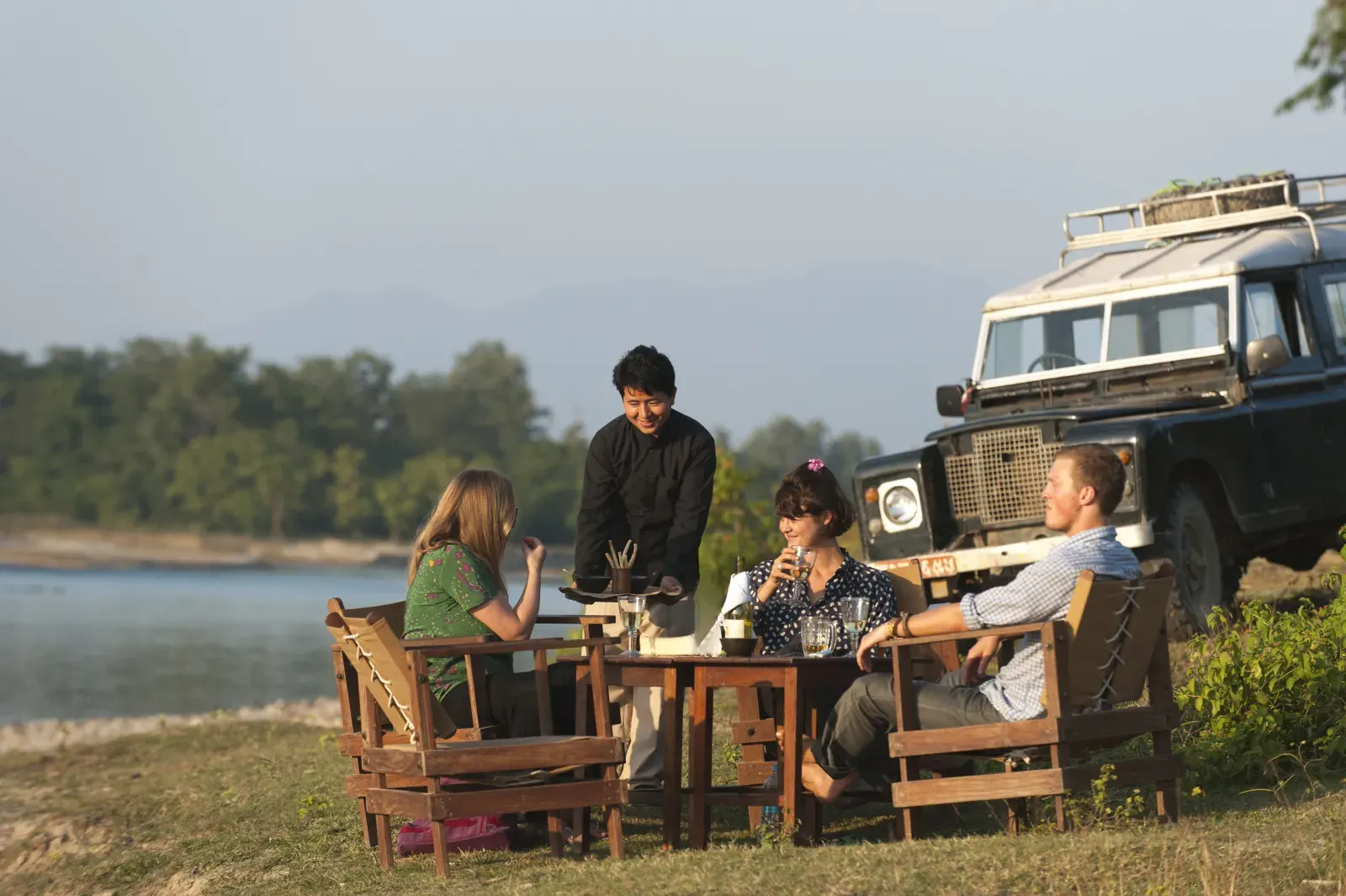
On arrival at your safari lodge, relax and enjoy the surroundings. In the evening, experience a Tharu cultural performance followed by dinner.
Overnight in Chitwan. Meals: American Plan (Full board)
Day 9: Chitwan National Park Safari & Jungle Activities (415 m)
The day begins early with a jeep safari in Chitwan National Park, where you will have the opportunity to spot rhinos, tigers, and various bird species.
Later, embark on a canoe ride on the Rapti River for a chance to observe crocodiles and other wildlife.
In the afternoon, enjoy a peaceful birdwatching excursion. The evening is free to relax or explore the surroundings.
Overnight at the safari lodge. Meals: American Plan (Full board)
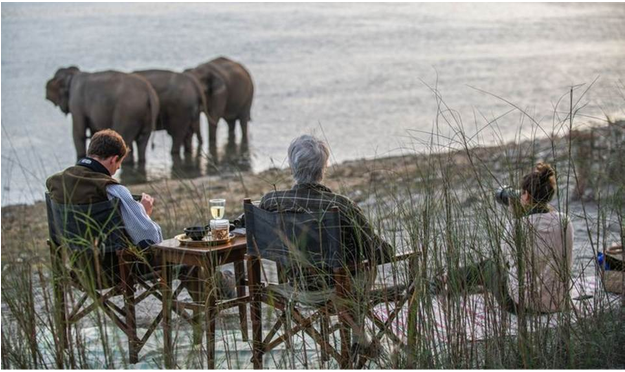
Day 10: Drive Chitwan to Pokhara — Pokhara Sightseeing (822 m)
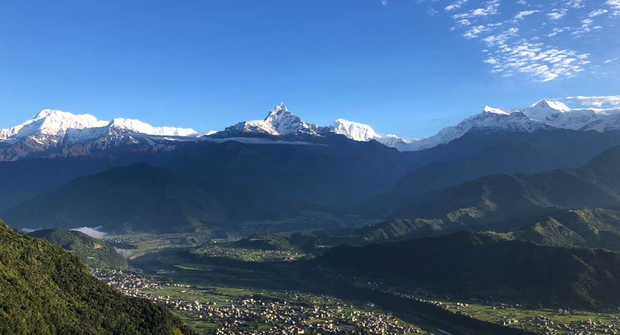
After breakfast at 9:00 AM, drive to Pokhara — the beautiful lakeside city at the foot of the Annapurna Range.
The journey takes about 5 hours through scenic countryside and hills.
Upon arrival, visit the Tal Barahi Temple on Phewa Lake, the dramatic Devi’s Falls, and Gupteshwar Mahadev Cave.
Overnight in Pokhara. Meals: Bed & Breakfast.
Day 11: Full Day Pokhara Tour (822 m)
At 5:00 AM, drive to Sarangkot to observe a stunning sunrise over the Annapurna Himalayas.
After returning for breakfast, take a boat across Phewa Lake and hike to the World Peace Pagoda for sweeping panoramic views. Visit Mahendra Cave in the afternoon.
The rest of the afternoon is free to enjoy the beautiful lake city at your own pace.
Overnight in Pokhara. Meals: Bed & Breakfast.
Day 12: Drive Pokhara to Kathmandu (1,400 m)
After breakfast at 9:00 AM, drive back to Kathmandu by private vehicle.
If time permits, stop at the charming hilltop village of Bandipur to enjoy the views and stroll through its authentic restaurants and cafés.
Arrive in Kathmandu in the evening for a Tibet tour briefing.
Overnight in Kathmandu. Meals: Bed & Breakfast.
Day 13: Drive Kathmandu to Kerung, Tibet (2,700 m)
Depart early at 5:00–5:30 AM for the Kerung border crossing, approximately 150 km from Kathmandu.
The scenic but rugged drive takes you through lush valleys and the dramatic landscapes of Nepal’s countryside, with breathtaking views of rivers, waterfalls, and gorges.
On reaching the Kerung border, complete immigration procedures and meet your Tibetan guide and driver.
Continue to Kerung town for an overnight stay. Meals: Bed & Breakfast
Day 14: Kerung to Tingri (4,350 m)
After breakfast, begin the ascent to the Tibetan Plateau — one of the most dramatic drives in the world. The road offers an incredible sense of standing atop the roof of the world, surrounded by the vast, barren beauty of the Tibetan landscape.
Weather permitting, enjoy breathtaking panoramic views of Mt. Cho Oyu (8,201 m) and Mt. Shishapangma (8,012 m).
A highlight is a stop at the serene Peiku Lake, set against snow-capped peaks — an ideal spot for photography.
Arrive in Tingri for an overnight stay. Meals: Bed & Breakfast.
Day 15: Tingri to Shigatse via North Everest Base Camp (5,200 m)
Drive across the vast Tibetan Plateau with endless horizons and dramatic Himalayan peaks.
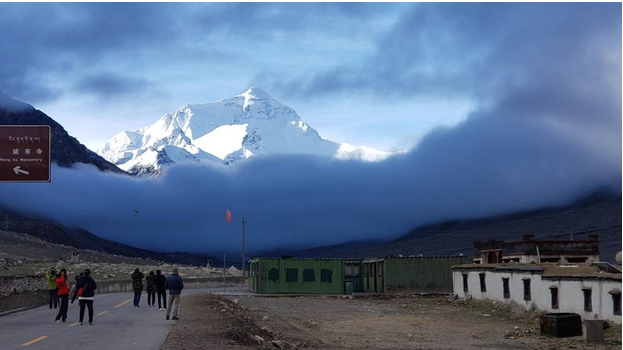
Visit Rongbuk Monastery — the world’s highest monastery — perched in a stark yet beautiful setting beneath Everest’s imposing north face.
Continue to Everest Base Camp (Tibet side) at 5,200 m for close-up views of the world’s tallest mountain. The route then crosses the spectacular Gyatchu La Pass (5,220 m) before descending through Lhatse and arriving in Shigatse — Tibet’s second-largest city, renowned for its rich history, vibrant culture, and important monasteries.
Overnight in Shigatse. Meals: Bed & Breakfast.
Day 16: Shigatse to Gyantse to Lhasa (3,650 m)
Continue the journey toward Lhasa, passing through Gyantse — home to the magnificent Pelkor Chode Monastery and the famous Kumbum Chörten.
Enjoy sweeping views of the Tibetan landscape, including Karo La glacier and Yamdrok Lake, one of Tibet’s most sacred lakes.
Arrive in Lhasa for an overnight stay. Meals: Bed & Breakfast.
Day 17: Full Day Lhasa Sightseeing (3,650 m)
Spend the day exploring Lhasa — Tibet’s spiritual and cultural heart. Visit the iconic Potala Palace, the former winter residence of the Dalai Lama, towering above the city with its extraordinary history and striking architecture.
Continue to the sacred Jokhang Temple, where pilgrims gather from across Tibet in devotion. Explore Sera Monastery, renowned for its lively monk debates, offering a unique insight into Tibetan Buddhist tradition.
Stroll through the vibrant Barkhor Bazaar, where prayer wheels spin, incense fills the air, and pilgrims and traders bring the ancient city to life.
Overnight in Lhasa. Meals: Bed & Breakfast.
Day 18: Half Day Lhasa Sightseeing — Drive to Shigatse (3,840 m)
Begin the morning with a visit to Drepung Monastery — once the largest monastery in the world and a major centre of Tibetan Buddhism.
Its whitewashed buildings and quiet chapels offer a glimpse into monastic life and centuries of spiritual tradition.
After lunch, enjoy a scenic drive back to Shigatse through picturesque valleys, traditional villages, and sweeping highland landscapes.
Overnight in Shigatse. Meals: Bed & Breakfast.
Day 19: Shigatse to Kyirong (4,300 m)
After breakfast, begin the return journey toward Gyirong (Kyirong). The landscape gradually transforms from the stark, windswept Tibetan Plateau into greener valleys and forested hillsides, offering a refreshing contrast in both scenery and climate.
Enjoy views of rivers cutting through deep gorges, scattered villages, and changing vegetation as the air becomes richer and the surroundings more lush — marking your descent toward the border region.
Overnight in Kyirong. Meals: Bed & Breakfast.
Day 20: Kyirong Border to Kathmandu (2,700 m)
Today marks the final stretch of your Tibetan journey as you drive from the Kerung border to Kathmandu.
Upon crossing into Nepal, the scenery transforms into lush greenery and terraced hills as you descend toward the capital.
Though the journey takes 9–10 hours, the ever-changing landscapes make it a truly rewarding experience.
On arrival in Kathmandu, check into your hotel for a well-earned rest.
Overnight in Kathmandu. Meals: Bed & Breakfast.
Day 21: Departure
If you are departing Nepal today, our staff will ensure everything goes smoothly and will accompany you to the international airport to say farewell.
If you are extending your stay, we welcome you to explore our range of additional tours and treks across Nepal.
When is the best time to go?
Every season tells a different story on this trail — pick the one that suits you.
Spring
BEST SEASON
March – June
Clear skies, rhododendrons in bloom
The best overall season for all three countries. Rhododendrons bloom in Nepal and Bhutan from March to April. Clear mountain views, stable weather and good road conditions in Tibet. Recommended.
Monsoon
NOT RECOMMENDED
July – August
Heavy rain, unreliable roads
Nepal and Bhutan receive heavy monsoon rainfall from late June through August. Mountain views are frequently obscured and some roads become unreliable. Swotah does not recommend this tour during the core monsoon months.
Autumn
BEST SEASON
September – November
Post-monsoon clarity, best views
Post-monsoon clarity means the sharpest mountain views of the year across all three countries. Dry, stable weather, comfortable temperatures and firm roads in Tibet. Equal to spring as the best season.
Winter
EXPERIENCED TRAVELLERS ONLY
December – February
Cold, possible snow, challenging Tibet
Bhutan and Tibet see below-freezing temperatures. Mountain passes in Tibet can be snowed in or closed. Only suitable for experienced cold-weather travellers. Extraordinary low-season atmosphere but serious preparation required.
What’s included?
What’s not included?
How Hard Is the Best of Nepal, Bhutan and Tibet trip?
This tour is suitable for travellers of all ages and general fitness levels. The focus is sightseeing, road travel and short walks rather than multi-day trekking.
The most physically demanding activity is the hike to Tiger’s Nest in Bhutan: a return hike of approximately six hours with 900 m of elevation gain on a rough, rock-strewn path. If you feel you cannot complete it, there is a café about halfway that provides good views, and we can arrange an alternative activity.
The canoe and jeep safari in Chitwan are easy; the city sightseeing in Kathmandu, Thimphu, Paro and Lhasa involves walking at a moderate pace on flat ground for two to four hours a day.
The main challenge on this tour is the altitude in Tibet — not from physical exertion, but from the elevation itself (up to 5,220 m over a mountain pass). Travelling by road into Tibet rather than flying allows your body to acclimatise gradually. Even so, most guests feel mild symptoms at some point in Tibet.
Everything you need to know…
Dropdown to see more
Tour Pace and Who it Suits
Best of Nepal, Bhutan and Tibet is a sightseeing and road-travel tour — not a trekking expedition. The daily pace is moderate: two to four hours of walking on guided sightseeing days, with longer road drives between destinations. The exception is the Tiger’s Nest hike in Bhutan (day 6), which is a six-hour return walk with around 550 m of altitude gain on an uneven rocky path. This is manageable for most adults of reasonable fitness; a halfway café with views of the monastery is available for those who prefer not to summit.
The tour is suitable for travellers of any age with no significant mobility impairment. There is no minimum fitness requirement beyond the ability to walk on uneven surfaces for a few hours. Those over 80 who wish to enter Tibet may be required to provide additional medical documentation — a letter from your GP confirming you are fit to travel at high altitude is worth bringing regardless of age. Consult your doctor if you have cardiovascular, respiratory or circulatory conditions before booking this tour.
Best Time to Visit
Spring (March to June) and autumn (September to November) are the recommended seasons for this tour. Both offer the most stable weather across all three countries, the clearest mountain views, and reliable road conditions in Tibet.
Spring brings rhododendrons in bloom in Nepal and Bhutan (March to April) and warming temperatures. Autumn brings post-monsoon clarity — the sharpest mountain views of the year and comfortable temperatures throughout the route.
Monsoon (June to September): Nepal and Bhutan experience heavy rainfall from late June to September. Roads can become unreliable and mountain views are frequently obscured. We do not recommend the main monsoon months (July and August) for this tour.
Winter (December to February): Bhutan and Tibet both experience below-freezing temperatures. The Tibetan plateau is cold and the mountain passes can be snowed in. Only experienced cold-weather travellers who specifically want a winter tour should consider this season.
Altitude in Tibet and What to Expect
Tibet is the highest region on Earth. The altitude you will sleep at reaches 4,300 m / 14,108 ft at Shegar on the return drive toward Nepal — and the Gyatso La Pass, crossed on the drive to Shigatse, sits at 5,220 m / 17,126 ft. Lhasa itself is at 3,650 m / 11,975 ft.
The most important preparation on this tour is the approach into Tibet. This tour drives from Kathmandu (1,400 m) into Tibet by road via Kerung, spending the first night at 2,800 m, the second at 4,050 m and the third at 3,900 m. This gradual ascent gives your body two full days to acclimatise before you reach Lhasa — significantly better than flying directly from Kathmandu to Lhasa, which would be a 2,250-metre altitude jump in under an hour.
Altitude symptoms to watch for: headache (most common), fatigue, loss of appetite, dizziness and insomnia. Mild symptoms are normal and typically improve within 24 to 48 hours as the body adjusts. Drink two to three litres of water per day. Do not drink alcohol or smoke in the first days at altitude. Walk slowly. Eat lightly. Inform your guide immediately if you develop a persistent severe headache, confusion, breathlessness at rest, or vomiting — these are signs of serious altitude illness that require immediate descent. No fitness level or age can guarantee immunity to altitude sickness. Your guide carries emergency oxygen.
Accommodation Across Three Countries
Nepal: 3-star hotels in Kathmandu and Pokhara with Wi-Fi, air conditioning, and attached bathrooms. In Chitwan National Park, you stay at a jungle lodge in Sauraha — comfortable and in keeping with the jungle environment, with an outdoor dining area and often a garden for wildlife watching.
Bhutan: Government-approved 3 to 4 star hotels for international tourists in Thimphu and Paro. All have en-suite bathrooms, hot water and Wi-Fi. Bhutan limits international tourism, and accommodation in the country is of a consistent, regulated standard.
Tibet: In Lhasa, comfortable 3 to 4 star hotels, some built in traditional Tibetan architectural style. Outside Lhasa — Kerung, Lhatse, Shigatse and Shegar — accommodation is considerably more basic (guesthouse standard) with variable hot water and heating. Bring warm layers for cold nights, especially at Lhatse (4,050 m) and Shegar (4,300 m).
Food Across Three Countries
One of the real pleasures of this tour is that each country has genuinely distinct food traditions.
Nepal: The staple dish is dal bhat takari — lentil soup with steamed rice and vegetable curry, endlessly refillable at most local restaurants. Kathmandu and Pokhara have large tourist restaurants serving everything from wood-fire pizzas to Israeli shakshuka to Newari feast menus. Chitwan’s lodge serves Nepali food alongside international dishes. Vegetarian options are always available; vegan can be managed but requires advance notice.
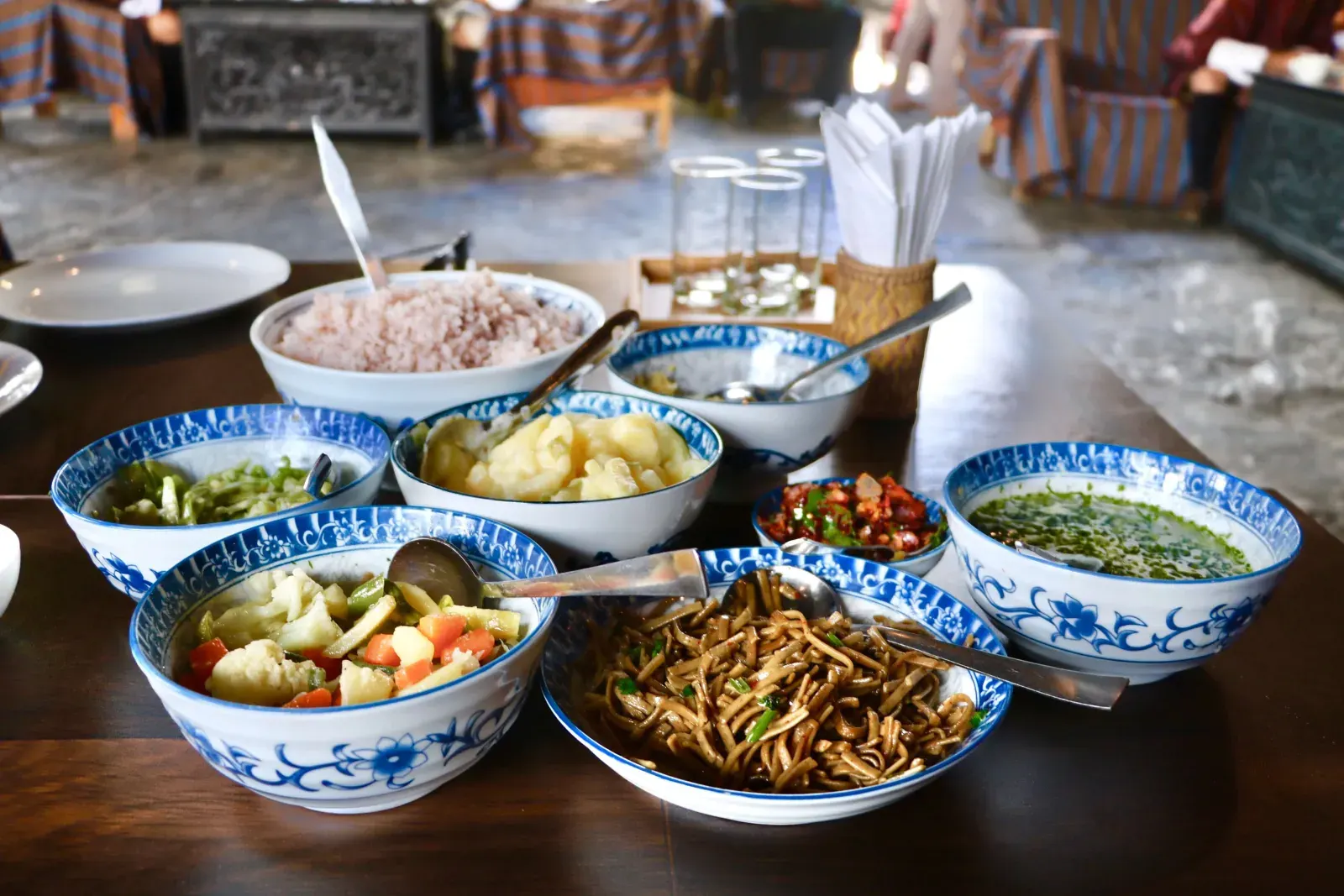
Bhutan: All meals are included throughout the Bhutan leg. Bhutanese food leans toward meat (yak, pork, chicken) and its most famous dish is ema datshi — dried chillies cooked with soft local cheese and served with rice. It is considerably more flavoursome than it sounds. Vegetarian meals are readily available. Red rice is the Bhutanese staple.
Tibet: Breakfast is provided at hotels. The traditional Tibetan diet features thukpa (noodle soup with meat or vegetables), momos (dumplings — also ubiquitous in Nepal), sha phaley (a fried meat-filled pastry) and tsampa (roasted barley flour). Butter tea — tea churned with yak butter and salt — is an acquired taste; approach it as a warming soup rather than a sweet drink. Lunch and dinner in Tibet are at your own expense.
Guides Support & Transport on This Tour
All three countries on this tour require travellers to be accompanied by a government-licensed local guide — independent travel is not permitted in Bhutan or Tibet. We work with partner agencies in both countries to ensure your guide is English-speaking, licensed and knowledgeable. In Nepal, our own guides accompany you throughout.
In Bhutan, transport is a government-approved private vehicle with a designated driver for the duration. In Tibet, private vehicles (type depending on group size). In Nepal, a combination of tourist buses (Kathmandu-Chitwan, Chitwan-Pokhara, Pokhara-Kathmandu) and private vehicles for transfers and sightseeing. Tourist buses in Nepal are comfortable and make food and rest stops. Private vehicle is available as an upgrade for Nepal road journeys at additional cost — ask us before booking.
In Chitwan National Park, you will have a qualified jungle guide in addition to your main Nepal guide — essential for safe navigation in an area with rhinos, crocodiles and tigers.
Bhutan: The Land of the Thunder Dragon
Bhutan is one of the most distinctive countries in the world. The kingdom strictly limits the number of international tourists and requires all visitors to travel with a government-approved guide on an organised tour — a policy designed to protect Bhutanese culture and minimise mass tourism’s impact. The result is a country that feels genuinely unaffected by global tourism in ways that Nepal and Tibet do not.
The Sustainable Development Fee (SDF) — currently USD 100 per person per night for most foreign nationals (excluding SAARC nationals) — is included in our Bhutan arrangements. This fee funds free education, free healthcare and environmental conservation in Bhutan, and accounts for a significant part of the overall tour cost.
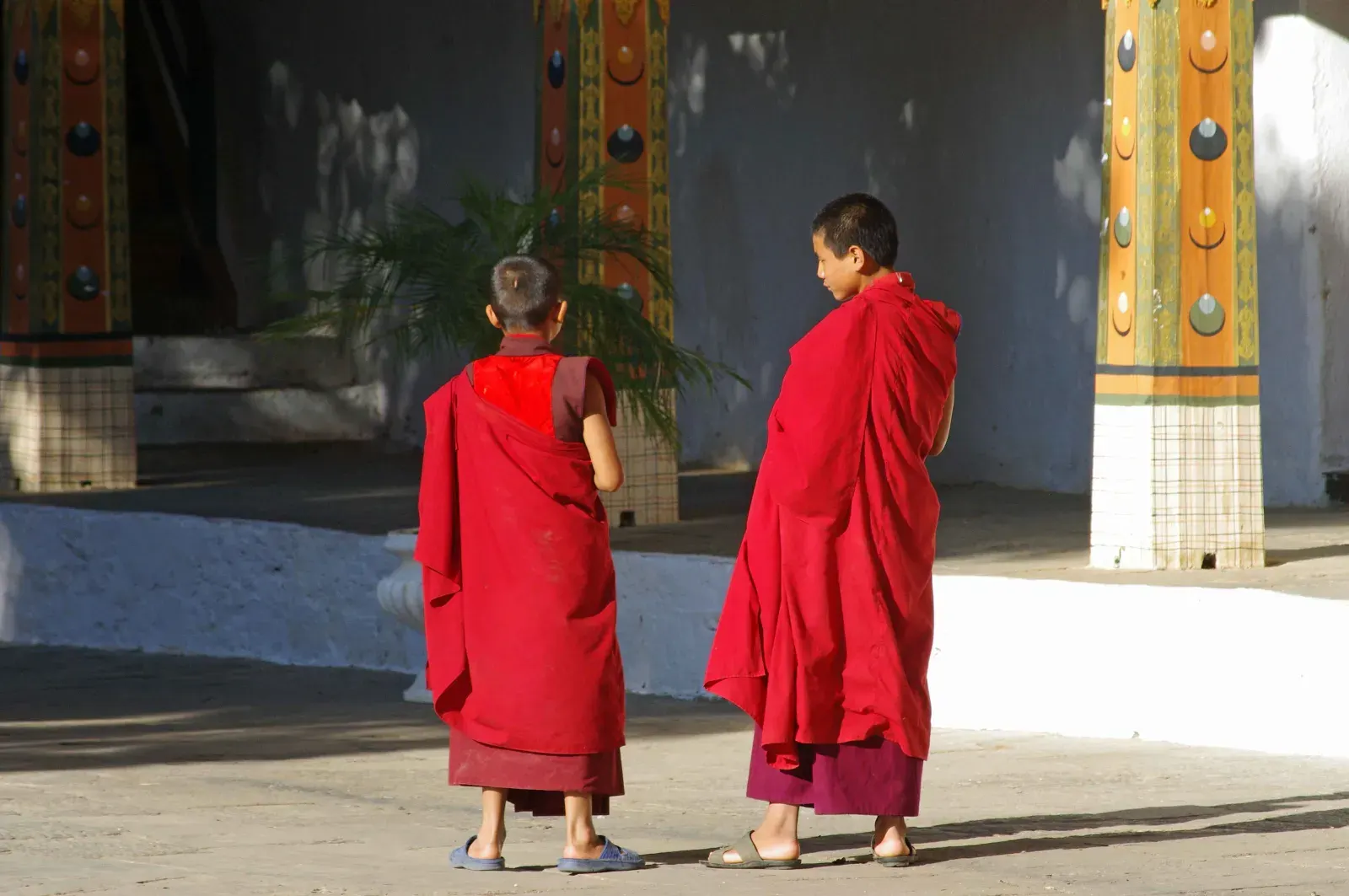
The official religion is Vajrayana Buddhism (specifically the Drukpa Kagyupa school of Tibetan Buddhism), and religion visibly shapes every aspect of daily life: the architecture of the dzongs (fortress-monasteries) that serve as administrative centres in each district, the prayer flags on every ridge and bridge, the mandala paintings on building facades and the ochre-robed monks everywhere. Bhutan measures national wellbeing by Gross National Happiness — a philosophy introduced by the fourth king, Jigme Singye Wangchuck, who came to the throne in 1972. His son, the current king Jigme Khesar Namgyel Wangchuck, visited Nepal in 2024. A constitutional monarchy since 2008, Bhutan has a parliament but the king remains the central figure of national identity.
Tibet: Culture, History and Political Context
Tibet sits at the heart of some of the most significant geopolitical tensions in Asia. Historically a sovereign Buddhist kingdom, Tibet was incorporated into the People’s Republic of China in 1951. After the failure of the 1959 Tibetan uprising, the 14th Dalai Lama fled to India where he leads the Tibetan government in exile. Today, Tibet is administered as the Tibet Autonomous Region of China. All tourists must travel with a government-appointed guide and are required to obtain a Tibet Travel Permit in addition to a Chinese visa (the combined cost is approximately USD 217 per person, depending on nationality). Images of the Dalai Lama are banned in Tibet; do not bring photographs, books or printed images of him into the country, and do not raise the political situation with locals unless they initiate the conversation — this is a matter of personal safety for the Tibetan people you meet.
Despite the political context, Tibet retains a deeply Buddhist character that is immediately apparent in Lhasa. The Jokhang Temple draws hundreds of pilgrims daily who prostrate along the Bakhor circuit in prayer. Drepung and Sera monasteries still function as active religious institutions. The Potala Palace — the winter residence of the Dalai Lamas until the 14th — is a UNESCO World Heritage Site and one of the most extraordinary buildings on Earth. For many visitors, two days in Lhasa is one of the most powerful cultural experiences of the entire three-country tour.
Nepal: Hinduism, Buddhism and Natural Diversity
Nepal is the only country in the world where Hinduism and Buddhism coexist at the same sites, practiced by the same families, often simultaneously. The most sacred Hindu temple in Nepal — Pashupatinath, dedicated to Lord Shiva — sits two kilometres from Boudhanath, one of the largest Buddhist stupas in the world. The Newari people of the Kathmandu Valley, the original inhabitants, have practiced a syncretic blend of the two religions for over a millennium.
The country’s natural diversity is equally extreme: from the jungle lowlands of Chitwan at around 200 m — where one-horned rhinoceroses, crocodiles, elephants and over 400 bird species live in a Terai riverine forest — to the mountain-ringed lake of Pokhara at 827 m with direct views of the Annapurna massif and Machhapuchhre. Chitwan National Park, established in 1973 and made a UNESCO World Heritage Site in 1984, is the success story of rhinoceros conservation in Asia: the one-horned rhino population in Nepal grew from fewer than 100 in the 1960s to over 700 today.
Nepal was unified by Prithvi Narayan Shah in 1768-69; until then it was a collection of independent kingdoms. The Kathmandu Valley — myth has it — was formed when the goddess Manjushri drained a lake by cutting a channel through the southern rim. The Tharu people of Chitwan and the Terai lowlands have lived in the forests for millennia, with a matriarchal social structure and a tradition of bamboo and mud architecture still visible in village walks today.
Permits, Visas & Entry Requirements
Nepal: Visa on arrival at Tribhuvan International Airport. USD 30 for 15 days or USD 50 for 30 days, paid in cash (US dollars only). You can complete the online application at nepaliport.immigration.gov.np up to 15 days before arrival — download and print the completed form to hand to immigration. Alternatively, complete the form on the kiosks at the airport. Bring two passport-size photos.
Bhutan: Visa arranged by us through the Bhutan partner agency after you arrive in Kathmandu. You will need to provide your passport details in advance. Cost: USD 40 processing fee plus the Sustainable Development Fee (SDF) of USD 100 per person per night (four nights = USD 400 SDF). All Bhutan permits and SDF are included in the tour price.
Tibet: A Chinese visa plus a Tibet Travel Permit (Group Travel Permit) are both required. The combined cost is approximately USD 217 per person (varies by nationality). We arrange Tibet permits through the Tibet partner agency from Kathmandu. Provide your passport details to us at least 2 to 3 weeks before departure to allow processing time. Note: Chinese visa applications can be made in your home country or at the Chinese Embassy in Kathmandu.
Responsible and Culturally Sensitive Travel
This tour passes through sites of profound religious and cultural significance in all three countries. A few specific points to be aware of:
Photography in Bhutan and Tibet: Always ask before photographing people or religious ceremonies. In Tibet especially, some locations inside monasteries and palaces do not permit photography — follow the signs and ask your guide if in doubt. Do not wander away from your guide in either country to take photographs; both require tourists to stay with their government guide.
Do not bring images of the Dalai Lama into Tibet. This is not a restriction from us — it is Chinese law and could cause serious difficulties for you and for Tibetan locals who are seen with such material. Do not engage Tibetan people in conversation about the political situation unless they raise it first.
Temple and monastery etiquette: Remove shoes before entering any temple or prayer hall (this applies in all three countries). Do not show physical affection publicly. Dress conservatively — no bare shoulders, shorts or short skirts at religious sites. Walk clockwise around stupas and religious monuments (this is the direction of prayer in Tibetan and Bhutanese Buddhism).
In Chitwan, stick to neutral and dark colours — bright clothing is visible to wildlife at distance. Do not feed the monkeys at Swayambhunath.
Currency, Money and Practical Tips
Nepal: Nepali Rupees. Exchange USD, GBP or EUR at Tribhuvan Airport or Thamel money changers. ATMs in Kathmandu and Pokhara accept major cards. Budget approximately USD 30 to 40 per day for lunch, dinner and personal extras in Nepal. USD 50 per day in Kathmandu if you plan to buy souvenirs.
Bhutan: Bhutanese Ngultrum (pegged 1:1 to the Indian Rupee). Indian Rupees are also accepted. Since all meals are included, you mainly need cash for souvenirs, cold drinks and tips. Exchange money in Kathmandu before entering Bhutan; ATM access is limited in Bhutan. USD 20 to 30 per day should cover extras.
Tibet: Chinese Yuan (CNY/RMB) only. Exchange money in Kathmandu or at the border before entering Tibet. Credit cards are not widely accepted outside Lhasa’s international hotels. Budget approximately CNY 150 to 250 per day (USD 20 to 35) for lunch, dinner and extras in Tibet.
Tips: Tipping is appreciated in all three countries. Your guide in Nepal typically receives 10% of the Nepal portion of the tour cost per group member. Bhutan and Tibet guides receive similar rates — your briefing will cover exact amounts. Tip porters (if any), drivers and jungle guides separately.
Book Now
Grand Himalayan Tour – The Best of Nepal, Bhutan & Tibet
More information at the top of the page
Thank you for deciding to book with Journeys of Distinction. If you could fill in some basic information below we can begin to process your booking.
Any details you are unsure of or you would like us to confirm with you, just leave them blank when you press submit and we will complete those details with you later.
If you would like us to call you to complete the booking instead just let us know in the notes box at the bottom.
*Tickets and options are all subject to availability at time of booking*
More information
Grand Himalayan Tour – The Best of Nepal, Bhutan & Tibet
More information at the top of the page
If you could fill in some basic information below we can begin to answer any questions or provide any information you’re missing.
Pleases select how you would like us to contact you, and input the information for your option below.
Other events you might be interested in…
Golden Circle – Nepal
Henley Regatta Hospitality

Ireland vs England Guinness Six Nations 2027
Brazilian Amazon Adventure
Alpengold

Spanish Symphony
The North York Moors with Steam Train (NYM Railway) to Whitby
Bicester Village VIP Shopping Experience with Luxury Transportation
The Lake District Rail Tour with Cream Tea & Cruise